
4. Foodborne Illnesses
Food handling is a constant biological battle and the best preventive medicine we can offer is our knowledge. This block is dedicated to unmasking the protagonists of food poisonings and infections, studying their favorite hiding places and the mechanisms they use to attack us.
We will analyze critical pathogens such as Salmonella or Listeria, along with emerging risks such as acrylamide. Additionally, we pay special attention to the protection of the most vulnerable populations.
4.1. High-Risk Populations
There are some groups of people more susceptible to suffering from a foodborne illness or suffering more severe effects. These are:
- Elderly people: Older people are more sensitive to any illness, and foodborne illnesses (FBIs) are no exception. Among them, the most worrying at this stage are listeriosis, salmonellosis, and campylobacteriosis.
- Children: This age group has an immune system still in development, so they have fewer resources to deal with FBIs. In any case, the risks most associated with this age are nutritional, such as obesity or overweight.
- Pregnant women: The diet of pregnant women does not only condition their health, but also that of the baby, so cautionary measures must be taken to the extreme. In general, there are two most worrying hazards at this stage: toxoplasmosis and Listeria.
- Immunocompromised people: This group of people includes all those who have a weak immune response. The immune system of these people may be affected by medication, a recent operation, or some pathology, so they are more prone to suffering from FBIs and it takes them longer to recover from them.
- Allergic people: In many cases, the allergic person is allergic to several foods at once. It is essential to know well the foods to which one is allergic and the ingredients or recipes in which we can find them.
4.2. Acrylamide. What it is and How to Prevent it
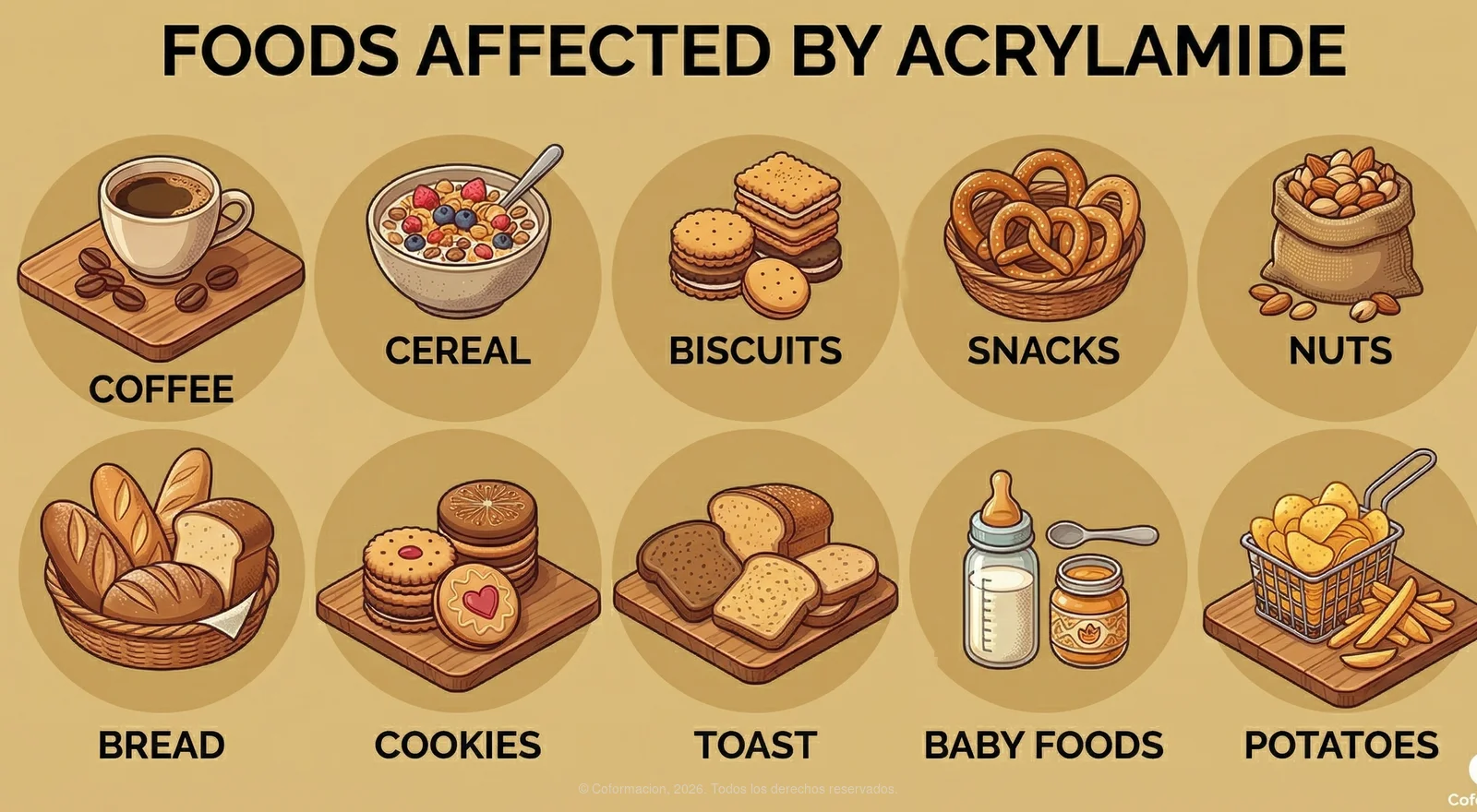
Acrylamide is an organic compound that is formed, mainly, when cooking certain foods rich in carbohydrates, such as cereals and potatoes, at temperatures >120°C and in low humidity environments.
It is also the substance that provides the characteristic aroma and color to cooked plant-origin foods, and it forms in high concentrations when over-baking, frying, or toasting. This phenomenon is known as the "Maillard Reaction".
The importance of acrylamide lies in the fact that the International Agency for Research on Cancer (IARC) has classified this substance as a "probable carcinogen for humans".
In homes we can reduce the presence of acrylamide by acting on 2 simple parameters:
Temperature + end of cooking/frying/toasting time
An adequate combination of both, without reaching extreme values, will ensure a smaller amount of acrylamide in the food ready for consumption.
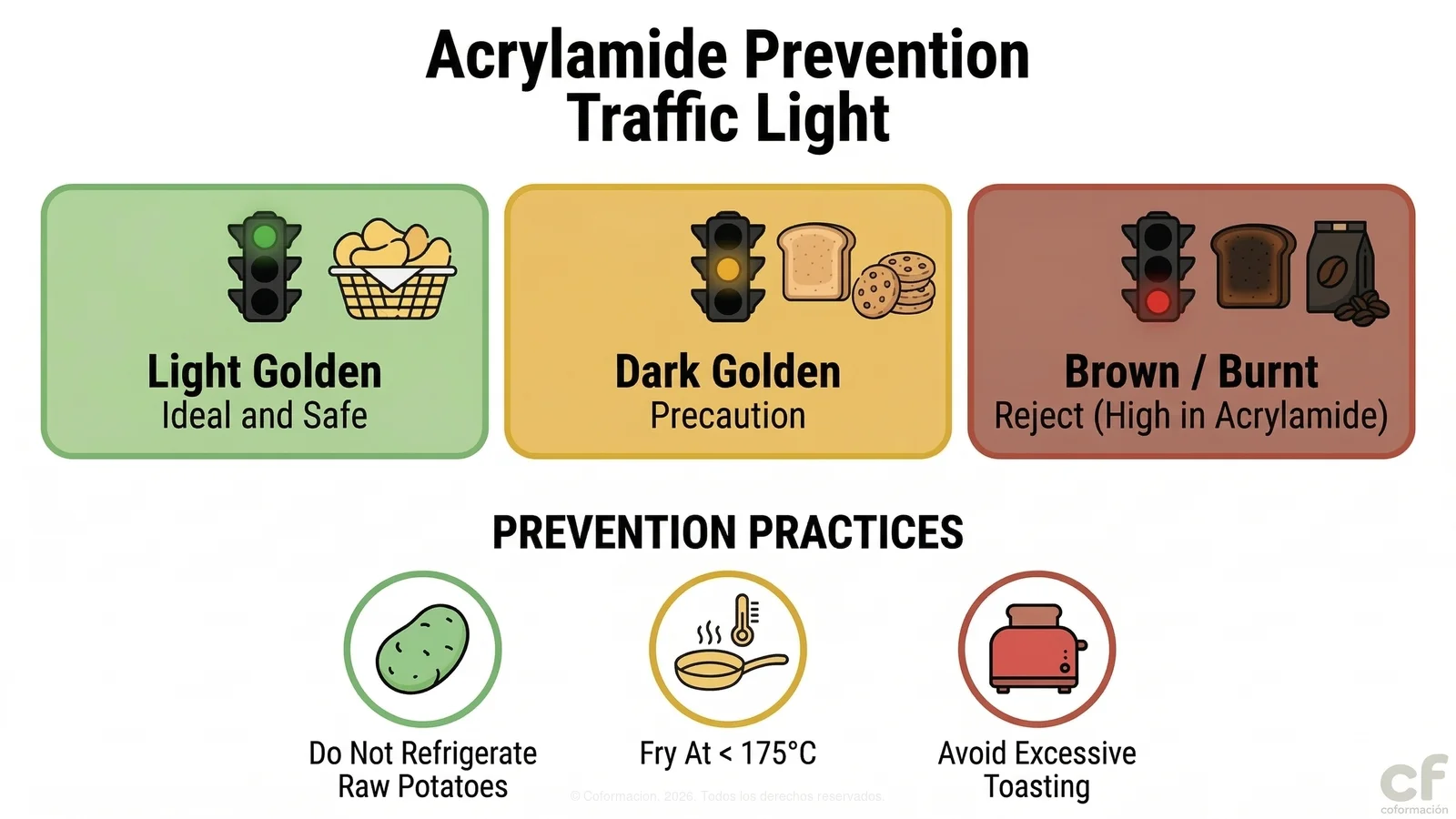
"Fried, toasted, and breaded, better gold than brown"