
2. Food Hygiene
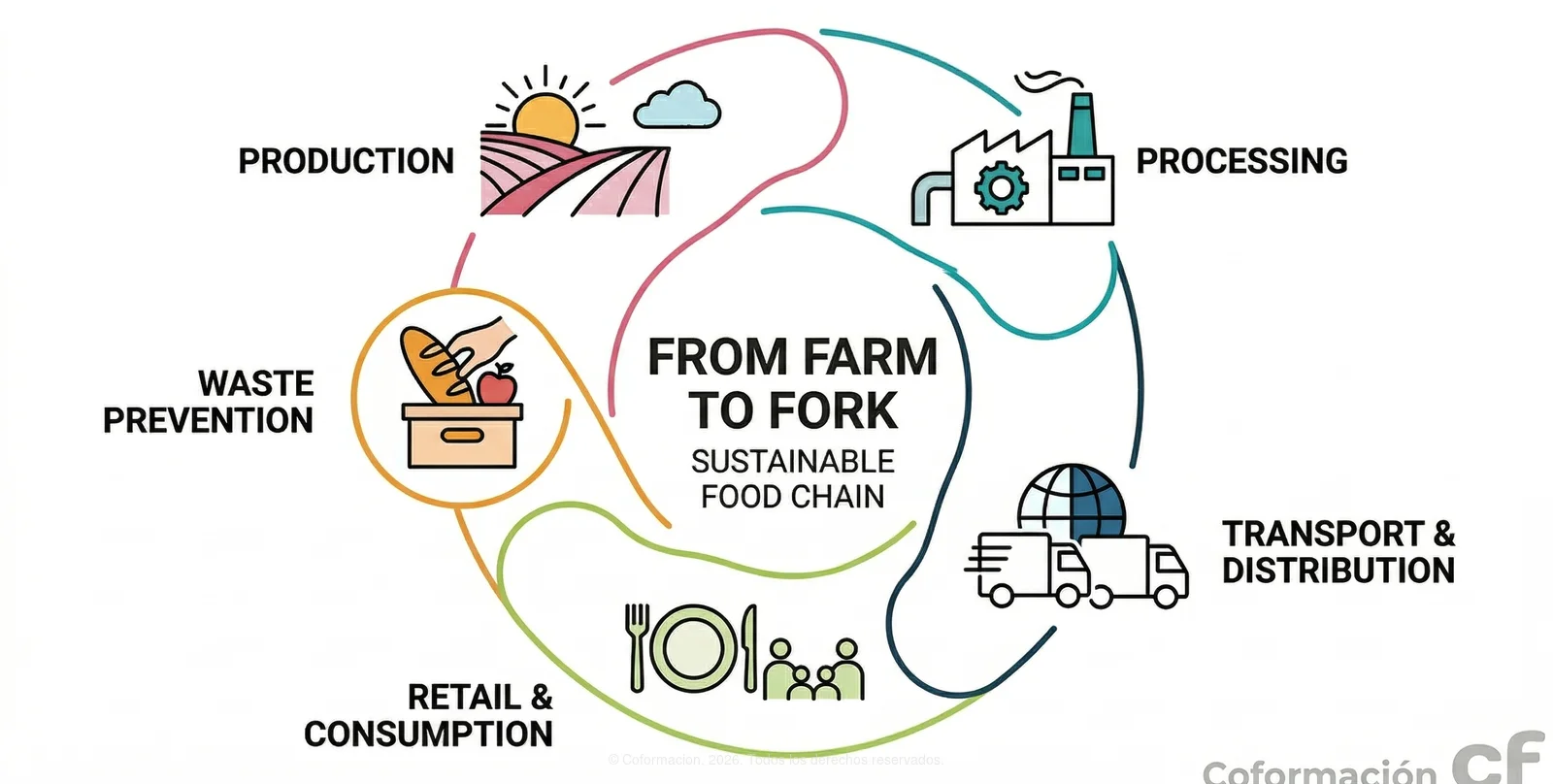
The safety of what we eat is not a matter of chance, but of a rigorous application of hygiene principles that transform an ingredient into a truly safe product. In this lesson, we are going to delve into the process that food follows 'from farm to fork'.
2.1. Foundations of Food Safety
The Food and Agriculture Organization of the United Nations (FAO) defines food security[cite: 39]:
"when all people at all times have physical and economic access to sufficient, safe and nutritious food to meet their needs." [cite: 39]
Two concepts derive from this definition: food security (supply security) and food safety or food harmlessness (food safety)[cite: 40].
Guaranteeing the safety and quality of food is essential to protect public health, keep food systems functioning, and enable sustainable economic development through safe trade and access to markets[cite: 41].
In this context, the European Commission presented the «From Farm to Fork» Strategy in May 2020 as one of the key initiatives within the framework of the European Green Deal[cite: 42]. While not forgetting that food safety and harmlessness are priorities, the main objectives of the strategy are[cite: 43]:
- Ensuring sufficient affordable and nutritious food, without exceeding the planet's limits[cite: 45].
- Reducing the use of pesticides and fertilizers by half and the sale of antimicrobials[cite: 46].
- Increasing the amount of land dedicated to organic farming[cite: 48].
- Promoting food consumption and more sustainable healthy diets[cite: 50].
- Reducing food loss and waste[cite: 52].
- Fighting against food fraud in the supply chain[cite: 54].
- Improving animal welfare[cite: 56].
2.2. Important Concepts
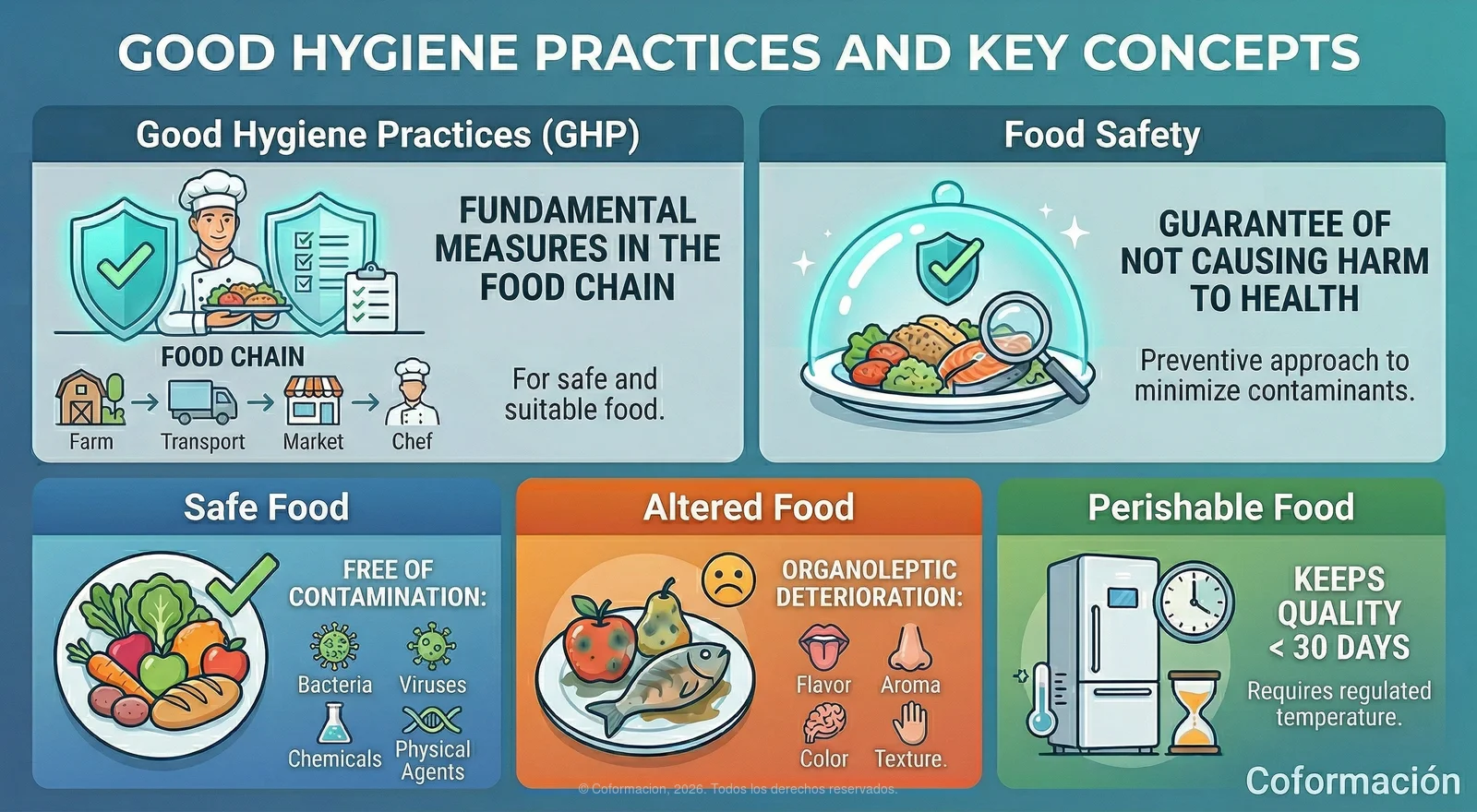
- Good Hygiene Practices (GHP): Fundamental measures and conditions applied at any stage of the food chain to provide safe and suitable food[cite: 66].
- Food Safety (Inocuity): Guarantee that food will not cause adverse health effects on the consumer when prepared or consumed according to its intended use[cite: 67]. The safety and suitability of food should be controlled through a preventive approach, for example, a food hygiene system[cite: 68]. GHPs should ensure that food is produced and handled in an environment that minimizes the presence of contaminants[cite: 69].
- Safe or Innocuous Food: That food which is free from contamination by bacteria, viruses, parasites, chemical substances, or external physical agents[cite: 70].
- Altered Food: That food which for various reasons has suffered a deterioration in its organoleptic characteristics (flavor, aroma, color, appearance, texture, etc.) or in its composition and/or nutritional value[cite: 71].
- Perishable Food: That food which by its natural characteristics retains its qualities suitable for marketing and consumption for a period of less than 30 days or which requires regulated temperature conditions for marketing and transport[cite: 72].
2.3. Consumer Rights
All people possess the right to receive safe food. The right to adequate food consists of ensuring that everyone has access every day to nutritious, sufficient, safe, and affordable food. It is a human right, not a privilege.
The food business operator is the one best equipped to design a safe system for food supply and to ensure that the food they provide is safe. Therefore, they must be the primary legal person responsible for food safety:
- The operator shall ensure, at all stages of production, processing, and distribution taking place in the businesses under their control, that food or feed comply with the relevant food law requirements.
- The operator shall ensure the traceability of food at all stages of production, processing, and distribution.
- Any operator who considers or has reason to believe that any of the food they have imported, produced, processed, manufactured, or distributed does not comply with food safety requirements shall proceed to its withdrawal from the market.
- The operator shall ensure that consumers are effectively and accurately informed of the reasons for a withdrawal and the competent authorities are notified.